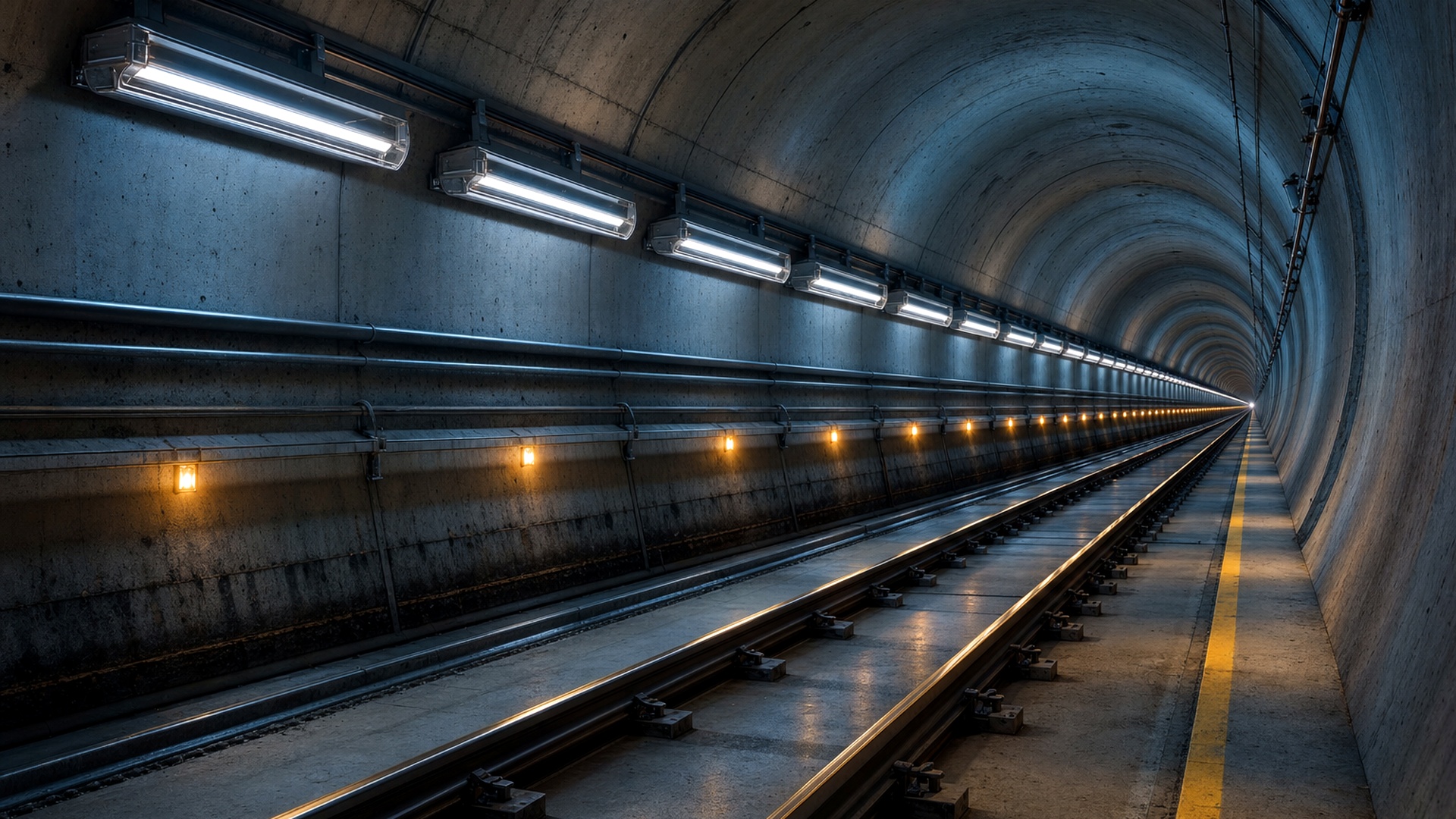
A 100,000-hour LED rating will not keep a tunnel fixture alive for 15 years.
Transit agencies increasingly specify LED tunnel and specialty fixtures for 15+ years of unattended service. The specification is reasonable. The engineering required to deliver it is not automatic. A fixture can carry an LED package rated for 100,000 hours and still fail in five years because a $1.20 electrolytic capacitor inside the driver was cooked by poor thermal design.
In-tunnel replacement is not a maintenance event. It is an access event. A single track outage, traction-power lockout, and flagging window can easily exceed the cost of the fixture itself. Over a 20 to 25 year capital horizon, avoiding even one re-entry cycle can dominate the fixture-price difference.
This executive brief sets out the submittal logic an agency should apply before accepting any 15-year service-life claim, from any vendor.
What you will take away:
Why MTBF is the wrong metric for service life, and the trap that catches MTBF-only specifications
The five independent reliability subsystems in a luminaire and the distinct wear-out mechanism governing each
Why the driver is almost always the binding subsystem, and the two design choices that control it
Four minimum submittal gates that any 15-year claim must clear before a specifier accepts it
A specifier's checklist covering driver loading, driver thermal, LED L70/L90, optics, housing and ingress, surge protection, warranty, and emergency lighting
How the Clear-Vu MTLx performs against each gate, used throughout as the reference implementation
The framework is vendor-neutral. It applies to any luminaire that can demonstrate the same five-subsystem evidence.